Advanced Registry Cleaner PC Diagnosis and Repair
Special Uninstaller
Special Uninstaller is an intelligent program installer created for computers that rely on a window-based operating system. It comes with an algorithm that allows it to detect any problem. It comes with a unique aspect that provides users with an effective uninstallation process that deeply scans after each removal so you can delete what's leftover, including registry traces, before reinstalling something else. The Special Uninstaller is a powerful and efficient uninstaller, which can help you remove stubborn built-in bloatware. It has tools like the autorun manager and windows tools to further enhance your experience with this software. They take on the mode of a hunter in ensuring all the unwanted information is gone from your system. The new and good-looking interface of the Special uninstaller is also very user-friendly, which might have been better because it doesn't look modern like IObit Uninstaller. But, It is enough and has a very good interface but not decent. When you open this program, you will get all the necessary options on the home page in the left sidebar. In fact, its UI is very simple, and no user can complain about its friendliness Continue reading...
Special Uninstaller Summary
Contents: Software
Official Website: www.specialuninstaller.com
My Special Uninstaller Review

Special Uninstaller is a highly configurable piece of software. Installing and using is quite easy, even for the novice users but if you find yourself in trouble, there's always the Help system that's very useful when needed. From my experience with it so far it works seamlessly, so why not give it a go.
There is also a full money-back guarantee, so it's totally risk-free.I can't think of a single reason not to buy Special Uninstaller as soon as possible. Great work. Highly Recommended.

Querying a package with RPM
You can run this command either on an installed package or on an uninstalled package file. If you are doing the former, you need specify only the name of the package. If the latter, you'll need to specify the package's full file name. To uninstall a package, use the command yum erase package
Simple Postfix Configuration
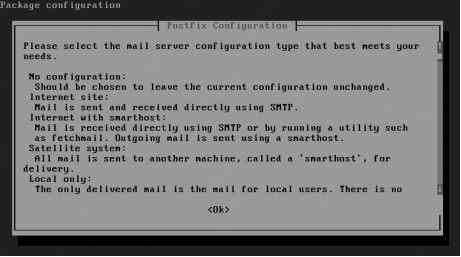
Remember, if you also want to consider sendmail (or another SMTP e-mail server), it's best to uninstall the Postfix service first. I choose not to purge the associated configuration files with the apt-get purge command, as I may yet decide that Postfix is the best option for a local SMTP e-mail server. To that end, I uninstall Postfix with the following command
Running Windows Software on Linux Wine
To install Wine on your system, search for wine on the Synaptic Package Manager (see Chapter 6). You will see a wine package listed, described as the Windows Compatibility Layer. Once installed, a Wine submenu will appear on the Applications menu. The Wine submenu holds subentries for Wine configuration, the Wine software uninstaller, and Wine file browser, as well as a regedit registry editor, notepad, and a Wine help tool.
The Registry vs Text Files

I think of the Windows Registry as the ultimate configuration database thousands upon thousands of entries, very few of which are completely documented, some located on servers and some located on clients. While it is possible to edit Registry entries manually, the fact that one does so using a graphical tool doesn't make the process intuitive. If you're not getting my message, I'm saying that the Windows Registry system is, at best, very difficult to manage. Although it's a good idea in theory, I've never emerged without injury from a battle with the Registry. Linux does not have a registry. This is both a blessing and a curse. The blessing is that configuration files are most often kept as a series of text files (think of the Windows .INI files before the days of the Registry). This setup means you're able to edit configuration files using the text editor of your choice rather than tools like regedit.
Pirut Package Manager A Repository Model of Software Management
Pirut is the same tool used during the installation procedure to select packages, only now you can uninstall packages. Check fedoraproject.org wiki Tools yum for tips on using Yum, including a script to let you perform partial installs. Yum by default stops the entire process if there is any configuration or dependency problem with any one repository or package.
Configuring Compiz Using Gnome Configuration Tools
Information in the GConf repository is stored as key value pairs that are organized into various hierarchical sections, much like the information in the Microsoft Windows Registry. Information about Compiz is stored in the apps compiz hierarchy. Information about specific plug-ins is hierarchically organized under apps compiz plugins and the name of each plug-in.
Modifying the PAM Configuration
Caution You may have encountered PAM on other systems where all configuration is arranged in a single file ( etc pam.conf). This file does not exist on Fedora RHEL systems. Instead, the etc pam.d directory contains individual configuration files, one per application that uses PAM. This setup makes it easy to install and uninstall applications that use PAM because you do not have to modify the etc pam.conf file each time you make such a change. If you create a etc pam.conf file on a system that does not use this file, the PAM configuration may become confused. Do not use PAM documentation from a different system. Also, the requisite control flag is not available on some systems that support PAM.
Software Management
Installing or updating software packages has always been a simple process in Linux due to the widespread use of the Red Hat Package Manager. Instead of using a standard tar archive, software is packaged in a special archive for use with the Red Hat Package Manager. These archives have become known as RPMs, where RPM stands for Red Hat Package Manager. An RPM archive contains all the program files, configuration files, data files, and even documentation that constitute a software application. With one simple operation, the Red Hat Package Manager installs all these for you from an RPM software package. You can even create your own RPM packages. You can use any of several RPM window-based utilities to manage your RPM packages, installing new ones or uninstalling ones you have.
Software installation and management
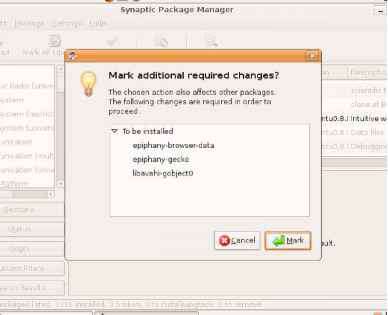
This handles installation and removal of software from the repository. apt-get install will install software, while apt-get autoremove will uninstall it. This leaves the software installation system in something of a state, because it now has a broken package. You'll be warned about this the next time you run Synaptic, for example, as shown in Figure 2.10, on the following page. Synaptic will still let you attempt to install software, however, and if the missing dependency package(s) are available in the repository, Synaptic will automatically add it to the list next time you try to install anything. Alternatively, as Synaptic suggests in its error message, you can click the FiIter button in the bottom left and then click the Broken link to see what packages are causing the problem and try to enact a manual fix (including, if the dependencies simply aren't available, uninstalling the problematic package).
Install Numpy, Pandas, Matplotlib And Scipy In Linux
First of all, we need Python installed on our system, which I have covered in our article on Python installation. Then we need to have pip , a package management tool with which we can install, uninstall and manage other packages written in Python, installed in our system.
Creating a radius based VPN with support for Windows clients
IMPORTANT NOTE For MS windows clients that are to have the VPNs set up, make sure that the following registry key does not exist, or is set to 0. It is possible to hack the windows registry to allow it to just use TCP IP within IPSec, removing the need for L2TP. However hacking the registry is undesirable on the client computers, so I'll just have to live with the more complicated server setup, and the extra overhead of the network packets.
Logging the right way
By default syslog-ng will remove sysklogd and the kernel logger, but we do not want their configs to sit in our etc till the underverse comes and therefore we purge them explicitly (personally I added APT Get Purge true to my apt.conf so that anything I uninstall gets purged, but apt settings are not for this article).
Security With Apparmor
One problem with AppArmor is that it doesn't work if it's installed on the same system with SELinux. So if you prefer the SELinux techniques of MAC-based security, uninstall the AppArmor packages first. The related packages installed by default are apparmor and apparmor-utils. As of this writing, the Hardy Heron release of Ubuntu includes SELinux support only for the CUPS print service described in Chapter 9.
Using dpkg and apt
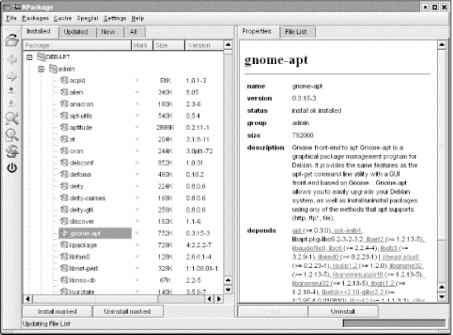
To uninstall a package, you can use either the -r (- -remove) or -P (- -purge) options. The - -remove option will remove most of the package, but will retain any configuration files, while --purge will remove the systemwide configuration files as well. For example, to completely remove superfrob The main window of kpackage displays a list of all the packages available for your system on the left, with a box to the right when you choose a package in the list, the box to the right includes information about the package you selected. You can install or uninstall packages by selecting them and choosing Install or Uninstall from the Packages menu, or by clicking the column labeled Mark to place a checkmark next to them, and then clicking the Install marked or Uninstall marked buttons. You can also install .deb packages directly by clicking the Open button on the toolbar to the left of the screen and selecting the file, or dragging .
Freeing Up Space
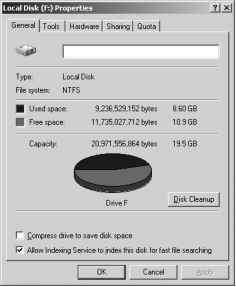
If you still cannot free up enough disk space, consider uninstalling unused software via the Add Remove Programs applet within Control Panel. If you have any large games installed, consider removing them first, because they usually take up substantial amounts of hard disk space. You might also consider deleting movie and MP3 music files, which are renowned for eating up hard disk space. The average MP3 is around 4MB, for example, and one minute of video typically takes up anywhere between 1MB and 10MB of disk space
The NFS Server
Two NFS server implementations are available on SUSE. One is the kernel-based NFS server the other is an implementation that runs in user space and is included in the package nfs-server. If you use the kernel-based NFS server, you need the package nfs-kernel-server (or, in older SUSE versions nfs-utils). If you install the user space nfs-server package, you need to uninstall nfs-kernel-server (or nfs-utils) because the packages conflict. The description that follows is valid whichever implementation is being used.
Managing YUM Caches
With the keepcache option enabled, Yum will keep its downloaded packages in the var cache yum directory. Should you want to save or copy any particular packages, you can locate them there. Caching lets you easily uninstall and reinstall packages without having to download them again. The package is retained in the cache. If caching is disabled, then packages are automatically deleted after they are installed. Packages will be organized into subdirectories according to their respective repositories. Updated packages for each repository will be stored in their own update subdirectory. You use the apt-get command to install and manage software packages. The apt-get tool takes two arguments, the command to perform and the name of the package. The command is a term such as install for installing packages or remove to uninstall a package. To install a package, you would use
Removing an RPM
You might want to remove (uninstall) a package if you realize you don't really need the software. For example, if you have installed the X Window System development package but discover you are not interested in writing X applications, you can easily remove the package by using the rpm -e command.
Net Beans 7.1 Review
In all fairness to Eclipse, I'm comparing this to Eclipse Helios PDT. I downloaded the Eclipse Indigo 64bit and added the PDT plugin, and I find this version quicker, and much more stable. I would recommend Eclipse PDT users uninstall Helios, download Indigo, and add PDT. I think you'll like it better, if you stay with Eclipse.
More Products
| PC Repair Tools | |
| Regtweaker Registry Cleaner & Windows Optimizer | |
| RegistryMum Registry Cleaner | |
| Regutility Best Registry Cleaner | |
| Regserve Registry Cleaner | |
| WiseFixer Registry Cleaner | |
| Pcfixkit Registry Cleaner & PC Optimizer |