Vector Art, Images, and Graphics Download
InfoGFX Pro Infographics Templates

InfoGFX Pro is a high quality product designed to to help designerfs create thousands of quality infographics designs and templates. The product has ease of use to ensure that complex information is simple to understand. They present the information through images, videos, charts, texts, icons, and diagrams, in an easy way for everyone understand. The templates help content creators spread their content faster and in a way that everyone will reach it. It means that the audience will understand the conveyed message because of infographics. Additionally, many businesses use this product to make infographics to sell their products and services to customers. Infographics will create brand awareness for your business as well as promote it. Continue reading...
Contents: 2,950+ DFY Infographics Design & Elements
Creator: Deni Iskandar
Official Website: pixelergraphics.com
InfoGFX Pro Infographics Templates Review

Maintaining your trust is number one. Therefore I try to provide as much reliable information as possible.
I personally recommend to buy this product. The quality is excellent and for this low price and 100% Money back guarantee, you have nothing to lose.
Read full review...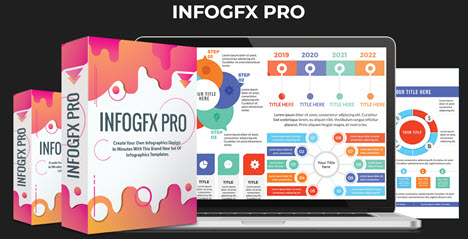
Installing Graphics Drivers
Ubuntu is extremely good at detecting and configuring graphics cards. By default it ships with a number of proprietary drivers to allow graphics cards to work and will alert you to this by using the Hardware Drivers Manager. You can then choose to enable or disable the drivers as appropriate, depending on your personal preference. (See the Open-Source Versus Proprietary note earlier in this chapter.) For the most part, Ubuntu will detect and configure the majority of graphics cards from the start, and even if it has problems, it will attempt to give you a display of some sort. This feature is known as BulletProof X, and it allows you access to tools that may help you fix your problem by trying different combinations of graphics cards and monitors.
Video Graphics Card Driver Support Ati Nvidia and Livna
Though a generic Xorg NVIDIA and ATI driver is included with Fedora, to make full use of your graphics driver, you will have to use the vendor-supplied NVIDIA or ATI drivers. Both NVIDIA and ATI provide Linux-compatible versions of their drivers, released almost monthly. The drivers contain updated bug fixes and enhancements. You can download and install these drivers either directly from the vendor Web site or with Yum using the Livna-prepared versions. It is always preferable to use the Livna versions of the vendor graphics drivers. The Livna versions have been tested and configured specifically for use on Fedora, whereas the direct vendor packages are generic, designed for all Linux systems. Most likely you will have difficulties trying to use the vendor graphics packages directly, whereas the Livna versions usually have no problems.
Open Office Draw for Graphics
OpenOffice features a graphics program called Draw. While it is technically a vector program, it provides some of the bitmap functionality of programs such as The GIMP and could be classified as a beginner- to intermediate-level graphics program. It is well suited for combining text, shapes, lines, and images into a single document, and has a limited ability to do a wide variety of tasks that usually require a specialized program. While some of its features are not as refined as they are in programs such as The GIMP, the advantage is that they are combined in one program. So if you want to create a business card with a graphic, you can do it without moving back and forth between programs.
Adding graphics and special effects
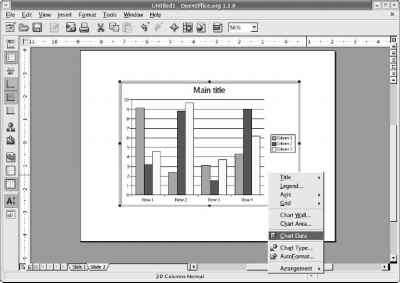
To jazz up your presentation, you may want to add graphics, charts, and other special effects to the slides. With Impress, you can do nearly everything you can think of all you have to decide is how many bells and whistles your presentation needs. It's your call, but I recommend using these features judiciously lest they detract from your presentation's main message. You can do a lot more than just add graphics and charts to your slide presentations. You can insert spreadsheets and Writer documents into a slide, add text that runs along a curve, and add special effects to various elements in a slide. Table 3-2 summarizes some common graphics and special-effects tasks, including information on how to perform each task. Common Graphics and Special Effects Tasks Convert text or graphics to 3D Insert graphics from a file Choose InsertoGraphics and then select the graphics file you want to insert. Adding graphics to a slide Choose InsertoGraphics to select a graphics file to insert.
Overview of Digital Graphics Terminology
Even if you're not a graphics artist (and I certainly am not one), everyone with a Web site or a digital camera has some familiarity with digital graphics. Terminology-wise, digital graphics is basically nothing more than storing images in files on your computer, regardless of whether these files contain pictures from your summer vacation, fancy buttons or other images that you're using on your Web site, artwork and drawings that you've created using graphics software, pictures that you've used a scanner to capture, images captured directly from your computer screen, or just about anything else that you can store in a file and display in a graphics application. The following provides a quick glossary of graphics terms that you may encounter as you start to work with online, digital graphics Bitmap A graphical image that is composed of multiple picture elements, each representing one bit of that image.
Converting Graphics to Text OCR
Scanners are fundamentally graphics devices their product is a bitmap graphics stream, which is easily displayed in an X window or saved in a graphics file. Sometimes, though, the purpose of scanning a document is to convert it to text in order to edit it in a word processor, load data into a spreadsheet, or otherwise manipulate it in a nongraphical way. To accomplish this goal, optical character recognition (OCR) programs exist. These programs accept a graphics file as input and generate a text file that corresponds to the characters in the input file. Essentially, the OCR package reads the characters out of the input file. This is an extremely challenging task for a computer program, though the software must overcome many obstacles, including streaks and blotches in the input file the varying sizes and appearance of characters in different fonts and the presence of nontextual information, such as embedded graphics.
Create Graphics with the GIMP
The GNU Image Manipulation Package, affectionately known as the GIMP to its friends, is a powerful graphics package. The GIMP provides a comprehensive range of functionality for creating different types of graphics. It includes tools for selections, drawing, creating paths, masks, filters, effects, and more. It also includes a range of templates for different types of media such as Web banners, different paper sizes, video frames, CD covers, floppy disk labels, and even toilet paper. Yes, toilet paper. You can load the GIMP by clicking Applications Graphics GIMP Image Editor. Start the GIMP by clicking Applications Graphics GIMP Image Editor.
General Graphics Interface
The General Graphics Interface (GGI) provides an alternative to the older versions of the graphical interface X and SVGALIB. It can actually run under the other interfaces and still provide the higher graphic performance. You can find out more about GGI at www.ggi-project.org . One specific area where graphics has a large following is in the gamming arena.
Cataloging the Image and Graphics Applications
When I talk about images and graphics, I mean applications that are meant to work with photographs or other images and those that enable you to prepare vector drawings drawings consisting of lines and shapes for use in various types of documents. SUSE Linux includes a number of such image and graphics applications. You can find these applications in the Main MenuO Graphics menu. Table 4-4 summarizes the image and graphics applications in GNOME and KDE desktops. I describe these applications in detail in Chapter 15. Table 4-4 summarizes the image and graphics applications in GNOME and KDE desktops. I describe these applications in detail in Chapter 15. Typical Image and Graphics Applications Here's what the image and graphics applications enable you to do
Using KView to View Graphics Files
You can start KView by choosing Graphics, Image Viewer, from the main menu, or by clicking on a graphics file in a kfm window. In addition, you can start KView from a command line. This is most useful if you want to review a set of graphics files. Use a command such as this one The supported graphics formats in KView include the following (additional formats are These formats should fill most of your graphics needs, as they include UNIX resource formats for icons, PC standards, Web standards, and even eps for viewing vector-based drawings saved in many popular design packages.
Setting a Screen Background Image
In X, you can display a bitmap image, a solid color, or a graphics file as your screen background, depending on the program you use to accomplish this task. With complicated color images, you can soon fill up your colormap from the screen background image. This may lead to color flashing as X programs run out of colors in the default colormap and therefore create their own colormaps.
How To : Install Nvidia 361.28 Graphics Drivers in Ubuntu/Linux Mint Systems
The latest version of Nvidia Graphics driver for Linux which is Nvidia 361.28 has been released and is available for download. It comes with plenty of fixes and changes. This article will guide you to install Nvidia 361.28 in Ubuntu and Linux Mint systems. Remove currently installed graphics drivers.
How To : Install Nvidia 346.35 Graphics Drivers in Ubuntu/Linux Mint Systems
The latest version of Nvidia Graphics driver for Linux which is Nvidia 346.35 has been released and is available for download. It comes with plenty of fixes and changes. This article will guide you to install Nvidia 346.35 in Ubuntu and Linux Mint systems. Remove currently installed graphics drivers.
How To : Install Nvidia 346.59 Graphics Drivers in Ubuntu/Linux Mint Systems
The latest version of Nvidia Graphics driver for Linux which is Nvidia 346.59 has been released and is available for download. It comes with plenty of fixes and changes. This article will guide you to install Nvidia 346.59 in Ubuntu and Linux Mint systems. Remove currently installed graphics drivers.
How To : Install Nvidia 337.12 Graphics Drivers in Ubuntu/Linux Mint Systems
The latest version of Nvidia Graphics driver for Linux which is Nvidia 337.12 has been released and is available for download. It comes with plenty of fixes and changes. This article will guide you to install Nvidia 337.12 in Ubuntu and Linux Mint systems. Uninstall the previously installed version of Nvidia graphics driver (if any).
How To : Install Nvidia 352.41 Graphics Drivers in Ubuntu/Linux Mint Systems
The latest version of Nvidia Graphics driver for Linux which is Nvidia 352.41 has been released and is available for download. It comes with plenty of fixes and changes. This article will guide you to install Nvidia 352.41 in Ubuntu and Linux Mint systems. Remove currently installed graphics drivers.
How To : Install Nvidia 343.22 Graphics Drivers in Ubuntu/Linux Mint Systems
The latest version of Nvidia Graphics driver for Linux which is Nvidia 343.22 has been released and is available for download. It comes with plenty of fixes and changes. This article will guide you to install Nvidia 343.22 in Ubuntu and Linux Mint systems. Remove currently installed graphics drivers.
How To : Install Nvidia 340.65 Graphics Drivers in Ubuntu/Linux Mint Systems
The latest version of Nvidia Graphics driver for Linux which is Nvidia 340.65 has been released and is available for download. It comes with plenty of fixes and changes. This article will guide you to install Nvidia 340.65 in Ubuntu and Linux Mint systems. Remove currently installed graphics drivers.
How To : Install Nvidia 331.49 Graphics Drivers in Ubuntu/Linux Mint Systems
The latest version of Nvidia Graphics driver for Linux which is Nvidia 331.49 has been released and is available for download. It comes with plenty of fixes and changes. This article will guide you to install Nvidia 331.49 in Ubuntu and Linux Mint systems. Uninstall the previously installed version of Nvidia graphics driver (if any).
How To : Install Nvidia 367.27 Graphics Drivers in Ubuntu/Linux Mint Systems
The latest version of Nvidia Graphics driver for Linux which is Nvidia 367.27 has been released and is available for download. It comes with plenty of fixes and changes. This article will guide you to install Nvidia 367.27 in Ubuntu and Linux Mint systems. Remove currently installed graphics drivers.
How To : Install Nvidia 331.89 Stable Graphics Drivers in Ubuntu/Linux Mint Systems
The latest version of Nvidia Graphics driver for Linux which is Nvidia 331.89 has been released and is available for download. It comes with plenty of fixes and changes. This article will guide you to install Nvidia 331.89 in Ubuntu and Linux Mint systems. Remove currently installed graphics drivers.
How To : Install Nvidia 340.24 Graphics Drivers in Ubuntu/Linux Mint Systems
The latest version of Nvidia Graphics driver for Linux which is Nvidia 340.24 has been released and is available for download. It comes with plenty of fixes and changes. This article will guide you to install Nvidia 340.24 in Ubuntu and Linux Mint systems. Remove currently installed graphics drivers.
How To : Install Nvidia 346.47 Graphics Drivers in Ubuntu/Linux Mint Systems
The latest version of Nvidia Graphics driver for Linux which is Nvidia 346.47 has been released and is available for download. It comes with plenty of fixes and changes. This article will guide you to install Nvidia 346.47 in Ubuntu and Linux Mint systems. Remove currently installed graphics drivers.
How To : Install Nvidia 334.21 Graphics Drivers in Ubuntu/Linux Mint Systems
The latest version of Nvidia Graphics driver for Linux which is Nvidia 334.21 has been released and is available for download. It comes with plenty of fixes and changes. This article will guide you to install Nvidia 334.21 in Ubuntu and Linux Mint systems. Uninstall the previously installed version of Nvidia graphics driver (if any).
How To : Install Nvidia 331.67 Stable Graphics Drivers in Ubuntu/Linux Mint Systems
The latest version of Nvidia Graphics driver for Linux which is Nvidia 331.67 has been released and is available for download. It comes with plenty of fixes and changes. This article will guide you to install Nvidia 331.67 in Ubuntu and Linux Mint systems. Uninstall the previously installed version of Nvidia graphics driver (if any).
How To : Install Nvidia 340.32 Graphics Drivers in Ubuntu/Linux Mint Systems
The latest version of Nvidia Graphics driver for Linux which is Nvidia 340.32 has been released and is available for download. It comes with plenty of fixes and changes. This article will guide you to install Nvidia 340.32 in Ubuntu and Linux Mint systems. Remove currently installed graphics drivers.
How To : Install Nvidia 343.36 Graphics Drivers in Ubuntu/Linux Mint Systems
The latest version of Nvidia Graphics driver for Linux which is Nvidia 343.36 has been released and is available for download. It comes with plenty of fixes and changes. This article will guide you to install Nvidia 343.36 in Ubuntu and Linux Mint systems. Remove currently installed graphics drivers.
How To : Install Nvidia 331.20 Graphics Drivers in Ubuntu/Linux Mint Systems
Nvidia-331.20-graphics-driver, nvidia-331.20-graphics-driver, nvidia-331.20-graphics-driver, nvidia-331.20-graphics-driver, nvidia-331.20-graphics-driver, nvidia-331.20-graphics-driver, nvidia-331.20-graphics-driver, nvidia-331.20-graphics-driver, nvidia-331.20-graphics-driver, nvidia-331.20-graphics-driver, nvidia-331.20-graphics-driver, nvidia-331.20-graphics-driver, nvidia-331.20-graphics-driver, nvidia-331.20-graphics-driver, nvidia-331.20-graphics-driver, nvidia-331.20-graphics-driver, nvidia-331.20-graphics-driver, nvidia-331.20-graphics-driver, nvidia-331.20-graphics-driver, nvidia-331.20-graphics-driver, nvidia-331.20-graphics-driver, nvidia-331.20-graphics-driver, nvidia-331.20-graphics-driver, nvidia-331.20-graphics-driver, nvidia-331.20-graphics-driver, nvidia-331.20-graphics-driver, nvidia-331.20-graphics-driver, nvidia-331.20-graphics-driver, nvidia-331.20-graphics-driver, nvidia-331.20-graphics-driver, nvidia-331.20-graphics-driver, nvidia-331.
How To : Install Nvidia 340.58 Graphics Drivers in Ubuntu/Linux Mint Systems
The latest version of Nvidia Graphics driver for Linux which is Nvidia 340.58 has been released and is available for download. It comes with plenty of fixes and changes. This article will guide you to install Nvidia 340.58 in Ubuntu and Linux Mint systems. Remove currently installed graphics drivers.
How To : Install Nvidia 331.38 Graphics Drivers in Ubuntu/Linux Mint Systems
The latest version of Nvidia Graphics driver for Linux which is Nvidia 331.38 has been released and is available for download. It comes with plenty of fixes and changes. This article will guide you to install Nvidia 331.38 in Ubuntu and Linux Mint systems. Uninstall the previously installed version of Nvidia graphics driver (if any).
GNOME Graphics Tools
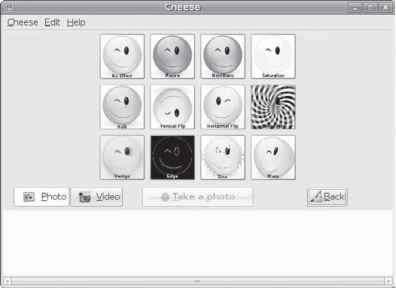
GNOME features several powerful and easy-to-use graphics tools. Some are installed with Linux, and you can download others, such as GView and Gtkam, from http gnomefiles.org . In addition, many of the KDE tools work effectively in GNOME and are accessible from the GNOME desktop. Most are available on the Ubuntu main repository. Inkscape (Figure 14-3) is a GNOME-based vector graphics application for Scalable Vector Graphics (SVG) images (www.inkscape.org ). Its features are similar to those of professional-level vector graphics applications such as Adobe Illustrator. The SVG format allows easy generation of images for Web use as well as complex art. Though its native format is SVG, it can also export to Portable Network Graphics (PNG) format. It features layers and easy object creation, including stars and spirals. A color bar lets you quickly change color fills.
Embedded Graphics
One might have various questions regarding graphics support on embedded Linux. What comprises a graphics system How does it work Can I use Linux desktop graphics on embedded systems as is What are the choices available for graphics on embedded Linux systems Is there a generic solution that can address the entire range of embedded devices requiring graphics (i.e., mobile phone to DVD player)
Creating Graphics
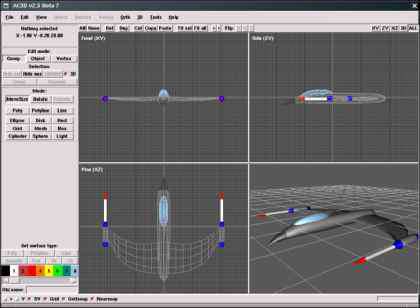
I created the Penguin Warrior spaceship model in the shareware AC3D modeller (http www.ac3d.org)3 and rendered it at various angles in the free POV-Ray 3.1 raytracer (http www.povray.org ). I drew the starry background in The GIMP. Though these aren't professional-quality graphics, they serve their intended purpose, and I had fun creating them. After creating the ship model in AC3D, I exported it to POV-Ray, manually tweaked the camera position in the .pov file, and added a clock variable to allow it to be automatically rotated. I wrote a script to automatically render 96x96 images of the model in 4-degree rotation increments (thereby saving the tedious work of rotating the model by hand). The entire rendering process took only a few minutes on a fast laptop. Finally, I used the free ImageMagick package to assemble the individual ship images into one long strip, saved as a bitmap file.
Portals and the Near Z Plane
Clipping polygons against the near z plane is a necessity, as discussed in the introductory companion book Linux 3D Graphics Programming. However, it causes problems with portals. In particular, as we are approaching a portal, right as soon as we are about to cross it to move into the adjoining cell, the portal gets briefly but completely clipped away by the near z plane. This causes
Collision Detection
The topic of collision detection is a non-graphical technique which nonetheless is very important for 3D graphics applications. Collision detection refers to the determination of whether two objects in the 3D virtual world overlap, or not. Collision detection generally also requires some sort of collision response if we detect a collision, such as moving the objects apart again. Collision detection algorithms are important for 3D graphics applications for two reasons They illustrate useful geometric intersection techniques which are often also needed for visual 3D graphics algorithms, such as ray tracing or shadow computation.
Back Face Culling
One of the simplest VSD algorithms is the back-face culling algorithm. This algorithm mainly addresses the efficiency issue of VSD. In 3D graphics, to cull an object means to remove it from further consideration. Thus, back-face culling refers to the removal from further consideration of faces (polygons) which are back-facing. Let's explore this idea more closely.
Multipass Techniques
The recent increase in availability of graphics acceleration hardware has made it feasible to implement multi-pass rendering algorithms. Multi-pass algorithms render the same scene multiple times, combining the results of each rendering into the final 2D image which gets displayed on-screen. This, of course, implies increased rendering work. There are two main reasons for multi-pass rendering either it is the most natural solution to a problem, or the presence of hardware acceleration makes it the fastest solution to a problem. OpenGL 1.3 supports multi-texturing, where the graphics API itself (and possibly also the hardware) allows for the simultaneous specification of multiple texture coordinates for one set of geometry. Then, in the presence of appropriate multi-texturing hardware, the scene is rendered with multiple textures, but in the time it takes to render just one pass.
Linux 3D Modeling
The introductory companion book Linux 3D Graphics Programming covered basic usage ofthe Blender 3D modeling package for creating 3D models. We continue the coverage in this book. Blender is zero-cost software a fully functional version of Blender, with no artificially imposed restrictions, is included on the CD-ROM.
Manipulating images with The GIMP
The GIMP is a free software program for manipulating photographs and graphical images. To create images with GIMP, you can either import a drawing, photograph, or 3D image, or you can create one from scratch. You can start GIMP from the system menu by selecting Graphics C GIMP Image Editor or by typing gimp& from a Terminal window. In many ways, GIMP is similar to Adobe Photoshop. Some people feel that GIMP's scripting features are comparable to or even better than Actions in Adobe Photoshop. One capability that GIMP lacks, however, is native support for CMYK (cyan-magenta-yellow-black) separations. If CMYK is not critical for your graphics needs, you will probably find GIMP to be just as powerful and flexible as Photoshop in many ways.
The GNU Image Manipulation Program
One of the best graphics clients available is The GIMP. The GIMP is a free, GPLed image editor with sophisticated capabilities that can import and export more than 30 different graphics formats, including files created with Adobe Photoshop. It is often compared with Photoshop, and The GIMP represents one of the GNU Projects' first significant successes. Many images in Linux were prepared with The GIMP. The GIMP can be found under the Applications, Graphics menu as simply The GIMP.
Manipulating images with GIMP
The GIMP is a free software program that comes with Fedora and RHEL for manipulating photographs and graphical images. To create images with GIMP, you can either import a drawing, photograph, or 3D image, or you can create one from scratch. You can start GIMP from the Applications menu by clicking Graphics The GIMP or by typing gimp& from a Terminal window.
Creating vector graphic images with Inkscape
When you need to have maximum flexibility working with graphics and text, a vector graphic editor can let you deal with geometric elements (such as lines, curves, and boxes) instead of dots (as you do with image editors). As a result, you usually get cleaner edges on your fonts and graphics and the ability to bend and shape those elements as you like. Inkscape (http www.inkscape.org ) is a popular vector graphics editor that is available with Fedora. Scalable Vector Graphics (SVG) format an open standard from the W3C (http www.w3.org Graphics SVG ). Thousands of SVG graphics and clipart elements are available in the public domain or under Creative Commons licenses. In Fedora, install the inkscape package to get Inkscape. I recommend you also install the openclipart package, which will give you hundreds of clipart items to use in your Inkscape creations.
Window System Graphic Programs
X Window System-based applications run directly on the underlying X Window System, which supports the more complex desktops like GNOME and KDE. These applications tend to be simpler, lacking the desktop functionality found in GNOME or KDE applications. Xpaint is a paint program, much like MacPaint. You can load graphics or photographs, and then create shapes, add text, and add colors. You can use brush tools with various sizes and colors. Xfig is a drawing program, and Xmorph enables you to morph images, changing their shapes. ImageMagick lets you convert images from one format to another you can, for instance, change a TIFF image to a JPEG image. Table 12-2 lists some popular graphics tools for Linux. GNOME Vector graphics application (www.inkscape.org) Table 12-2 Graphics Tools for Linux Table 12-2 Graphics Tools for Linux
Open Office Impress Presentations and Slideshow
You can create presentations quickly and simply with Impress. The format for information in a presentation is slides, which are a single screen in size and can combine text and graphics. The presentation can then be printed or shown on the monitor. The first slide of your presentation now appears. Click the area where you want to feature text or insert a graphic. Begin typing (where there is existing text, simply click the text and begin typing over it), or select Graphics from the Insert menu and proceed by selecting the graphics filename of your choice.
Presentations Open Officeorg Impress
You can format text by highlighting it and right-clicking it, by using the Text Formatting toolbar that appears whenever you click inside a text box, or by selecting an entry on the Format menu. Impress also features a healthy selection of drawing tools, so you can create quite complex diagrams. These are available on the Drawing toolbar along the bottom of the screen. You can also easily insert pictures, other graphics, and sound effects.
Taking a tour of Open Officeorg Draw
Along the top of the window is the usual menu bar. OpenOffice.org Draw is a typical vector graphics program, meaning that it relies on lines rather than Insert The usual charts, frames, graphics, and spreadsheets, along with scanning functions Format The usual brush and graphics formatting, along with layers and style formatting
Spiral2 Adding Backing Store
Backing Store is a common performance technique in graphics. It involves holding the current window contents in a buffer for repainting as needed. Backing store is not to be confused with double-buffering (see Figure 59.4), although the logic is similar. Backing store can be implemented in the display system Many X servers allow it to be selectively enabled for individual windows at the request of the application. Or it can be implemented within the application itself. At present, Graphics2D and Swing do not provide either option, but we can improve graphics performance by adding our own backing store implementation.
Desktop Environments and Window Managers
The simplest graphical desktops consist of the X Window System, which displays the windows and graphics, and a window manager , which determines where windows are placed and how users interact with applications. A window manager, such as fvwm2, determines window focus (that is, which window is currently accepting in pun) and some keyboard shortcuts. Window managers often include some sort of control panel or task bar, but not always.
The GIMP Image Editor
The GIMP image editor, available from the Applications Graphics menu (but see the section What's New in 10.04 on page 390), is an incredibly well-featured and powerful image editor, championed by many people as the Linux equivalent of Adobe Photoshop. It does take a little getting used to, not least because it divides its components up into separate windows on your desktop (see Figure 14-7).
Login Window Configuration
To change the login window, use the Login Screen Setup window accessible by choosing System Administration Login Window. This configures the GNOME Display Manager (GDM), which runs your login process. Here you can set the background image, icons to be displayed, the theme to use, users to list, and even the welcome message (see Figure 4-5).
Using a Scanner on a KDE 3Based System
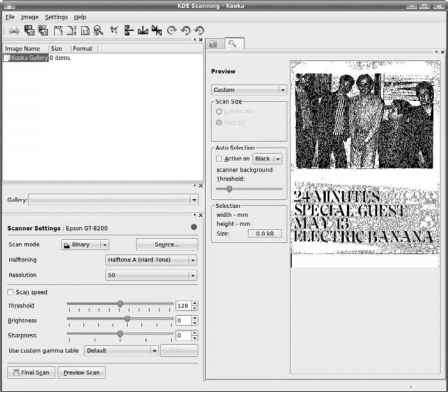
To start Kooka, select the K Menu C Graphics C Kooka - Scan & OCR Program menu item. This displays a dialog that probes your system for available scanners and then displays a summary dialog listing all of the scanners that it has found. It also provides an optional checkbox that tells Kooka to always use the scanner that has been detected, which enables you to skip this dialog in the future and can be useful if you only have one scanner. Click OK to proceed he initial Kooka screen appears, as shown in Figure 24-32. The dialog enables you to specify the image format in which you want to save the scanner image. Kooka supports most standard lossless graphics and scan formats, including BMP, PNG, PPM, and TIFF, and also supports popular lossy formats such as JPEG. Selecting a format and clicking OK saves your new scan with a default name, which will be listed in the Kooka Gallery pane at the top left of the Kooka window.
Create a Virtual Machine on KVM
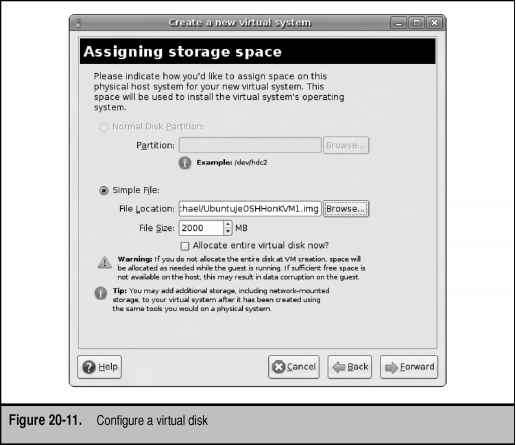
Would you like to enable graphics support (yes or no) yes The entries configure a 2GB file as a virtual disk in my home directory. It uses the Ubuntu JeOS ISO file, which was downloaded to the same directory. Graphics support enables automatic viewing of the virtual machine console, after the domain is created, in Figure 20-9.
Other Word Processors
The StarOffice productivity suite (http www.sun.com staroffice ) from Sun Microsystems, Inc. is a commercial product that runs on Linux, UNIX, and Windows operating systems. StarOffice contains applications for word processing, spreadsheets, presentation graphics, e-mail, news, charting, and graphics. Like OpenOffice.org, StarOffice contains many features that make it compatible with Microsoft Office applications. In particular, it includes the capability to import Microsoft Word and Excel files. There are also other tools in StarOffice that enable you to create business graphics, edit raster images, and edit mathematical formulas (StarOffice Math). AbiWord doesn't yet import all of these file types cleanly. Although the recent version of AbiWord supports Word styles, sometimes tables, graphics, and other features don't translate perfectly. If you want to work with a Word document in AbiWord, open it as AbiWord, correct any font problems, and save the document in AbiWord format.
Running Xconfigurator
Select the number of colors and video resolutions for each number of colors. A higher number of colors (8-bit, 16-bit, or 24-bit) allow better quality graphics, but can slow performance. Higher resolutions (800 ts 600, 1024 ts 768, or 1152 ts 864) allow more space for windows, but everything is smaller. You can select several resolutions for each set of colors. Position the cursor over a selection and press the space bar to select it. Highlight Ok and press Enter to continue. The window warns you that it is about to test X.
Working with the GRUB Configuration File
The first part of the GRUB boot menu consists of the four lines that determine how the boot menu should be handled. The first line defines the color scheme that is to be used in this menu. Then the line default 0 specifies that the first menu item should start by default this is what you see without user intervention. Then the timeout 8 line sets an eight-second pause in which the user can interact with the boot menu. If in this eight seconds the user doesn't do anything, the default menu item starts with its default settings. Next, the graphics of the boot menu are defined with the gfxmenu (hd0,1) boot message line. This specifies that the boot menu is read from the first hard drive (hd0) and then from the second partition, which makes it hd0,1. (The first item is always item number 0, which is why it's hd0. To refer to the second item, a 1 is used to refer to the third item, a 2 is used, and so on.
The Filesystem Hierarchy Standard FHS
The FHS furthermore recommends that software uses subdirectories of usr share and usr lib to guard against name clashes. These subdirectories are referred to as compartments in some places. For instance, architecture-independent files of the OpenOffice.org suite reside under usr share openoffice while the Gimp graphics programme may store such files under usr share gimp. Even if both programmes provide a file named tree.png, the packages can happily coexist.
Using Corel Word Perfect
Instead of having a lot of different applications for drawing and graphics editing, those features are built into the WordPerfect application. Other tools in WordPerfect include a spell checker, a thesaurus, and a grammar checker. The following are the image file formats that WordPerfect can import CompuServe GIF Enhanced Windows Metafile Framemaker Vector IBM Graphics Data Format GEM Metafile CALS format Mac PICT2 Lotus PIC IBM PIF NAPLPS Standard ANSI Profile Targa Windows Metafile X Window bitmap JPEG CorelDraw Harvard Chart (3.0) Micrografx Product PCX Sun RasterFile TIFF Graphic Windows Bitmap WordPerfect Graphic (1.0, 2.0) and X Window Dump (xwd).
Using a Windows Printer from Linux

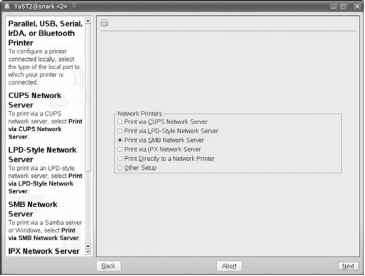
At this point, you can click the Test printing button to send a test printout to the remote printer. A dialog box that gives you a choice of sending a text or graphical printout to the remote printer is displayed. If the remote printer can print graphics, you should send a graphical test sheet to it in order to make sure that it is correctly configured. The graphical test sheet also contains text, so it will test both capabilities.
Running Windows Software on Linux Wine
Wine is a Windows compatibility layer that allows you to run many Windows applications natively on Linux. Though you could run the Windows OS on Wine, the actual Windows OS is not required. Windows applications will run as if they were Linux applications, able to access the entire Linux file system and use Linux-connected devices. Applications that are heavily driver-dependent, such as graphics-intensive games, may not run. Others that do not rely on any specialized drivers may run very well, including Photoshop, Microsoft Office, and newsreaders such as NewsBin. For some applications, you may also need to copy over specific Windows dynamic link libraries (DLLs) from a working Windows system to your Wine Windows system32 or system directory. To set up Wine, start the Wine Configuration tool. This opens a window with tabs for Applications, Libraries (DLL selection), Audio (sound drivers), Drives, Desktop Integration, and Graphics.
The X Window System and XFree86
Linux and Unix systems use the same standard underlying graphics utility known as the X Window System, also known as X or X11. This means that, in most cases, an X-based To run the X Window System, you need to install an X Window server. A free version of X Window server software, known as XFree86, is used on most Linux systems, though commercial versions are available from MetroLink (www.metrolink.com ) and Xi graphics. Once you install the XFree86 server, you must provide configuration information about your monitor, mouse, and keyboard. This information is then used in a configuration file called etc X11 XF86Config, which includes technical information best generated by an X Window System configuration program, such as Xconfigurator, xlizard, or XF86Setup. When you configured the X Window System when you installed your system, this file was automatically generated.
Working with Digital Cameras on Kubuntu Systems

Open with DigiKam is one of the default options on a KDE 3-based system when you attach a standard digital camera to a USB port on your system. (You can also add this option to a KDE 4-based system by following the instructions in the section entitled Customizing Device Recognition of a KDE 4 System. earlier in this chapter.) You can manually start DigiKam by selecting the K Menu O Graphics O DigiKam - photo management menu command on a KDE 3-based Kubuntu system, or by selecting the K menu O Applications O Graphics O Photo Management - DigiKam menu command on a KDE 4-based Kubuntu system.
Available Desktop Environments
GNOME GNOME is built atop the GTK widget set, which was originally developed for the GNU Image Manipulation Program (GIMP) graphics utility. Since version 1.2, GNOME has used Sawfish as the default window manager (GNOME 1.4.0.6 is current at the time of writing). In any version, you can easily reconfigure GNOME to work with other window managers, although some integrate better with GNOME than do others. GNOME features an ever-increasing number of mini-applications and configuration modules. It's currently the favored desktop environment on Red Hat and Debian systems. You can learn more at http www.gnome.org . CDE The Common Desktop Environment (CDE) is the only commercial desktop environment available for Linux. Although popular on many commercial versions of Unix, CDE is fairly uncommon on Linux. CDE uses the Motif widget set, which has historically been the widget set of choice for commercial Unix and Linux applications.
Creating Your Own Fedora Install Spins with Pungi
If you want to include third-party software such as the vendor drivers supplied by Livna or multimedia software like MPlayer with its DVD support, you will have to modify the Pungi Yum configuration file you want to use to include the third-party repository Yum configuration. This is a simple matter of editing the Yum configuration file and performing a copy and paste from the third-party repo file in etc yum.repos.d directory. For example, to add the support for the Livna repository, you would edit the etc yum.repos.d livna.repo file, copy its contents, and paste them to the bottom of your etc pungi Yum configuration file. You could then specify Livna packages in your Pungi manifest file, such as kmod-nvidia for the NVIDIA vendor graphics driver, or mplayer for MPlayer. You could do the same with your freshrpms.repo file to let you access packages on the Freshrpms repository.
Setting Up Desktop Effects
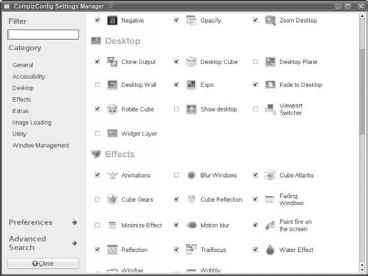
To get desktop effects to work, you need a suitable modern graphics card. Having installed SUSE, the easy way, particularly if you have done a GNOME install, is to run the Gnome Control Center and choose the icon Desktop Effects.'' This will attempt to install an appropriate driver for your card, reconfigure your graphics using sax2 to use that driver, and rewrite your display manager configuration ( etc sysconfig displaymanager), so that GDM or KDM starts the Xgl server rather than X. The X Window system is the de facto graphics standard for modern Unix-like systems. SUSE Linux provides complete, integrated support for the most popular open source X Window system desktop environment, KDE and GNOME. It also provides a complete spectrum of window managers for users who prefer a graphical user interface with lower hardware and memory requirements. If you want the fancy desktop effects,'' your SUSE system provides them as long as you have a suitable graphics card.
Configuring Your Hardware
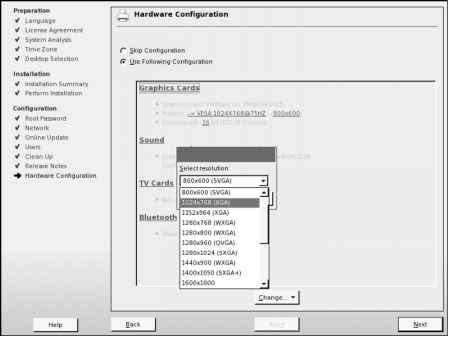
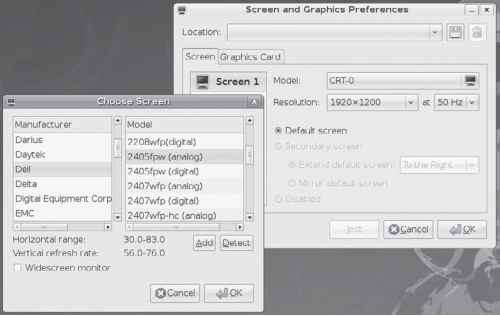
YaST in SUSE 10 has changed the way it detects your graphics capabilities. YaST will automatically sense what your current configuration is and will then allow you to change those individual settings. To change your monitor configuration from what YaST detected, click on the monitor listed under Graphics Cards. You will be presented with a list of available monitors from which you can choose (see Figure 1-31). Every Linux book and piece of documentation on X Windows configuration has a disclaimer about configuring your graphics system. This book is no different because there are real dangers if you set up your monitor incorrectly. Because the graphics card drives the monitor, it is imperative that you either configure the graphics system with standard lower settings, or take a look in the documentation that came with both your monitor and your graphics card and figure out the correct settings for them.
Linux and Your Digital Camera

GNOME has a camera-support tool called gtkam. This is a GTK+ front end to the command-line gphoto software. To run it, go to the Graphics menu and click Digital Camera Tool. The first time, it will ask you to identify your camera model from the list of 500+ cameras it supports. After you have your camera configured, gtkam will help you download your images from the camera to your PC. Just click the thumbnail to select.
Civilization Call to Power
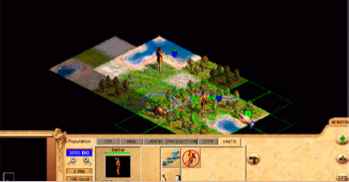
If you like the Freeciv game that comes with Red Hat Linux, you will love CCP. Engaging game play is improved with enhanced graphics, sound, and animation. English, French, German, Italian, and Spanish versions are available. Figure 7-8 Civilization Call to Power features excellent graphics and network play. Figure 7-8 Civilization Call to Power features excellent graphics and network play.
Post Script Printer Definitions PPD Files
The PostScript Printer Definition (PPD) language was developed for graphics, and adapted for the first Apple LaserWriter printers. Many developers give this hardware software combination credit for starting the desktop publishing revolution in the 1980s. Without getting into the details of PPD, such drivers are available for many printers, and can be installed on Linux and Microsoft Windows operating systems.
Importing Photos Using FSpot
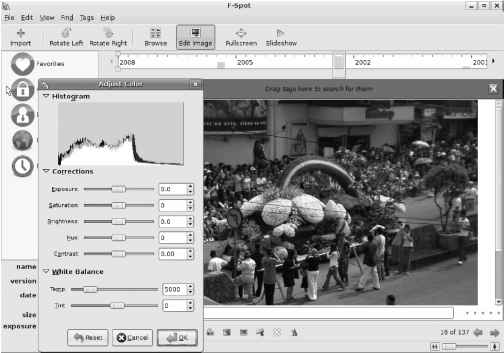
F-Spot is styled after image-cataloging programs you might have used under Windows or Macintosh, such as iPhoto or Picasa. Once you run F-Spot (Applications Graphics F-Spot Photo Manager), or after you click the Open F-Spot Photo Manager button that appears along the top of a Nautilus file browser window when you insert a memory card or attach your digital camera, the F-Spot Import window will appear. (Depending on your configuration, the Import window may appear within a file browser.)
GNOME Desktop Preferences

Several appearance-related configuration tasks have been combined into the Appearance tool. These include Themes, Background, Fonts, Interfaces, and Visual Effects. To change your theme or background image, or configure your fonts, use the Appearance tool (System Preferences Appearance). The Appearance window shows five tabs Theme, Background, Fonts, Interface, and Visual Effects (see Figure 8-2). The Background tab was discussed in Chapter 3. The Theme and Fonts tabs are covered in the following sections. The Interface tab lets you modify the appearance of toolbar and menu items, whether to display icons and where to display text. A preview section shows how menus and toolbar items will appears depending on your choices. The Visual Effects tab lets you choose the level of desktop effects ranging from just a simple display to full for 3-D effects for windows (wobble, shrink, and explode).
Xen Virtualization Kernel
What is the name of your virtual machine my-newvm1 How much RAM should be allocated (in megabytes) 256 What would you like to use as the disk (path) home my-newvm1 How large would you like the disk to be (in gigabytes) 8 Would you like to enable graphics support (yes or no) yes What is the install location Once the files have been downloaded, the text-based install interface will start up, asking for keyboard and language. If you enabled graphics support, the standard Fedora graphical install will start up.
Using an X Configuration Tool
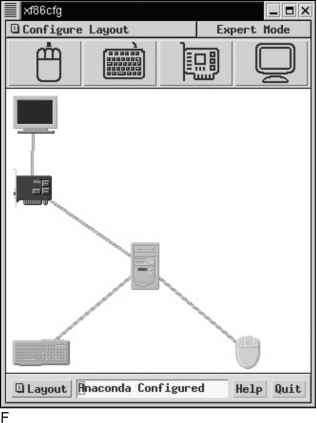
XFree86 is the most common X server in Linux, but it's not the only one available for Linux, nor is it the most common outside of the Linux world. Two commercial X servers are available for Linux Xi Graphics' Accelerated X (http www.xig.com ) and MetroLink's Metro-X (http www.metrolink.com ). Both servers offer an assortment of features that are useful in certain specific situations, such as multiscreen and touch-screen support. These servers also sport somewhat different lists of supported hardware than does XFree86, so you may want to use a commercial server with some video hardware. Commercial X servers for Linux use a configuration file similar to XF86Config, but their details differ. Consult the software's documentation to learn how to configure it.
Lynx and ELinks Line Mode Browsers
Lynx is a line-mode browser you can use without the X Window System. A Web page is displayed as text only. A text page can contain links to other Internet resources but does not display any graphics, video, or sound. Except for the display limitations, Lynx is a fully functional Web browser. You can use Lynx to download files or to make Telnet connections. All information on the Web is still accessible to you. Because it does not require much of the overhead that graphics-based browsers need, Lynx can operate much faster, quickly displaying Web page text. To start the Lynx browser, you enter lynx on the command line and press enter.
Proprietary File Formats
Many other programs outside the Linux world use proprietary formats. Office suites other than Microsoft Office, desktop publishing programs, tax-preparation software, advanced graphics tools such as Adobe Photoshop, and more all use proprietary formats. Some also support cross-platform formats, and as a general rule, if you want to exchange data files created with these programs, you should store them in a cross-platform format. In a few cases, you may be able to import the native file format using a Linux program, or even run a Linux version of the program.
Taxonomy of Parallel Computing
Systolic computers are usually special-purpose hardwired implementations of finegrained parallel algorithms exploiting one-, two-, or three-dimensional pipelining. Often used for real-time postsensor processors, digital signal processing, image processing, and graphics generation, systolic computing is experiencing a revival through adaptive computing, exploiting the versatile FPGA (field programmable
View and Edit Pictures
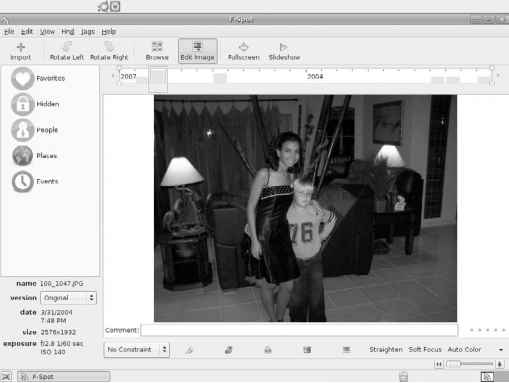
As with music, video, and documents, Ubuntu creates an appropriate folder for you, in this case called Pictures. As you may have guessed, this is a storage location for your digital photographs and any other graphics you bring to the computer. Not only does Ubuntu provide you a place to store your pictures, but the nice people at Canonical made sure that Ubuntu came with an application that would help you import, organize, share, and edit your digital pictures. This program, called F-Spot, can be accessed by selecting Applications Graphics F-Spot Photo Manager. F-Spot supports 16 different graphical file types including JPEG, TIFF, GIF, and PNG. If you need to touch up your photos before sharing them on the Web, you can remove red eye, crop pictures, resize, and even adjust the brightness and contrast. As with most everything else in Ubuntu, you are provided a fully functional tool for absolutely free
Every QPaint Device Has Metrics
It often happens that graphics drawn into a window need to be resized or reoriented as the window changes size. The class QPaintDeviceMetrics can be used to determine the current size (and some other information) of the QPaintDevice. The following example program uses the information in a QPaintDeviceMetrics object to vary the positions and sizes of things painted on the window. As shown in Figures 12-7 and 12-8, the text spaces itself vertically at even intervals in the window, and the white rectangle in the background reshapes itself to fit the window. The QPaintDeviceMetrics object is created on line 23, and it contains all of the information we need to scale the graphics. There are two height and width values one is measured in pixels and the other is in millimeters. The one you should use depends on the characteristics of the device being painted. For example, if you are painting to a printer, the precise millimeter information can be very handy.
Working Example of Java
Define, instantiate, and register a MouseMotionListener object. this.addMouseMotionListener(new MouseMotionAdapter( ) public void mouseDragged(MouseEvent e) Graphics g getGraphics( ) int x e.getX( ), y e.getY( ) g.setColor(Color.black) g.drawLine(lastx, lasty, x, y) lastx x lasty y public void actionPerformed(ActionEvent e) clear the scribble Graphics g getGraphics( ) g.setColor(getBackground( ))
Changing Desktop Backgrounds

Changing the background of your desktop is one of the more common configuration tasks when personalizing your system. To customize your desktop, you can select a solid background color, select an existing graphics image from the default list given in the Desktop Wallpaper dialog, or click Add to navigate to the location of a specific graphics file that you may want to use as your background. (I tend to use vacation or other scenic photos.)
Xview Programming Reference
XView (X Window-System-based Visual Integrated Environment for Workstations) is a user-interface toolkit to support interactive, graphics-based applications running under the X Window System. This toolkit, developed by Sun Microsystems, Inc., is derived from earlier toolkits for the SunView windowing system. With over 2000 SunView applications in the workstation market, there are many programmers already familiar with the SunView application programmer's interface (API). XView is based upon Xlib, the lowest level of the X Window System available to the programmer. While developing XView user interfaces does not require Xlib programming experience, there are good reasons for learning more about Xlib, especially if your application renders graphics.
Rsh rlogin and telnet
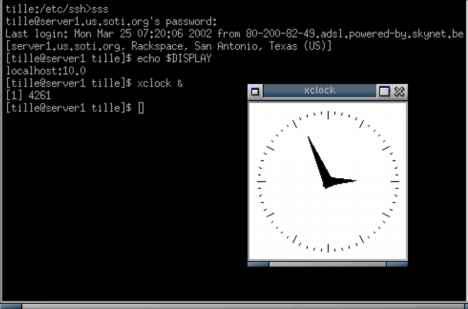
As we already explained in Chapter 7 (see Section 7.3.3), the X Window system comes with an X server which serves graphics to clients that need a display. After that, connect to the remote host and tell it to display graphics on the local machine by setting the environment variable DISPLAY
Grand Unified Bootloader GRUB
GRUB configuration is held in the boot grub grub.conf file. (You can also access this file as etc grub.conf, which is linked to boot grub grub.conf.) You only need to make your entries and GRUB will automatically read them when you reboot. There are several options you can set, such as the timeout period and the background image to use. Check the GRUB info documentation for a detailed description, info grub (accessible from System Help, search on Grub). The timeout option lets you set the time delay before the default is started up, and the spashimage option specifies a background image. The hiddenmenu option will hide the full menu on bootup. To see the full menu with this option on, press esc. The boot option specifies the disk to boot from (commented out by default). See the Grub info page for a detailed listing of the Grub commands.
Eye Candy for the Masses
Up until now, enabling these desktop effects has required a lot of work involving downloading specific packages and also configuring some of them using the console. However, with Ubuntu 8.04 this has been done away with and desktop effects are available out of the box, depending on whether your graphics card is powerful enough. Ubuntu relies upon the Compiz window manager, which to most end users will not appear any differently to Metacity, the standard window manager in use by Ubuntu. You should already have the latest graphics card driver for your system as Ubuntu automatically gives you access to the proprietary driver through the Restricted Driver Manager. Check out Chapter 2, Post-Installation Configuration, for more information on this tool. Extra Provides more aesthetically pleasing set of effects. Requires faster graphics-card.
Window Managers
All Linux and Unix systems use the same standard underlying X graphics utility. This means, in most cases, that an X Window System-based program can run on any of the window managers and desktops. X Window System-based software is often found at Linux or Unix FTP sites in directories labeled X11. You can download these packages and run them on any window manager running on your Linux system. Some may already be in the form of Linux binaries that you can download, install, and run directly. Netscape is an example. Others will be in the form of source code that can easily be configured, compiled, and installed on your system with a few simple commands. Some applications, such as Motif applications, may require special libraries. Window managers operate through the underlying X graphics utility. The X Window System actually provides the basic operations that allow you to open, move, and close windows as well as display menus and select icons.
Manual Display Configuration
Your display will be detected automatically, and Ubuntu will configure both your graphics card and monitor. Normally you should not need to perform any configuration manually. However, with some hardware, your display or graphics card may not be correctly detected. Also, you may want to configure an additional screen(s) for multi-display output. If you are using a vendor's graphics driver (restricted hardware) such as the Nvidia or ATI graphics driver, the respective vendor configuration tools will be installed for you. You can access these by choosing Applications System Tools. The Nvidia configuration tool will be named something like Nvidia X Server Settings. You should use the vendor's configuration tool for configuring a vendor's drivers. The Nvidia configuration tool is in the nvidia-settings package (see the following line of code). It is not installed with the Nvidia driver. You must use Synaptic Package Manager to install it yourself.
Installing and Using Window Managers
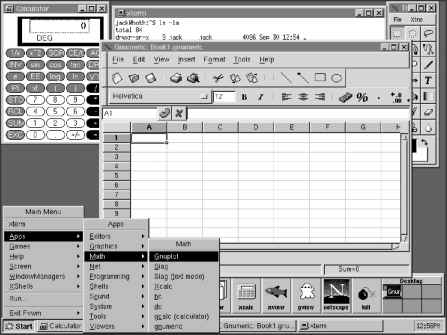
The original version of FVWM has been around for a while, so updates have resulted in a spin off FVWM2. This window manager combines the simplicity of the original window manager with up-to-date graphics controls. Like the other window managers, they allow for extensive customization of nearly every aspect. The default configuration file resides in etc X11 fvwm. If you copy system.fvwm2rc to your home directory with the name .fvwm2rc from your own directory, you can make as many modifications as you see fit.
Creating Your Own KDE Theme
Start creating graphics using GIMP or another bitmapped drawing program. Use the graphics that come with a downloaded KDE theme to see the size that you'll need for title bars, buttons, Panel backgrounds, and so on. 3. Save your screen elements as indexed xpm format graphics. 5. Update your configuration files as other themes have done, to refer to the new graphics you've created. Many good graphics programs in Linux can be used to create new theme elements and screenshots of your theme. GIMP and XV are included in most Linux distributions. The KDE paint program, kpaint, is included with KDE and is described in Hour 17, Using Graphics Utilities in KDE.
Configuring Your Display
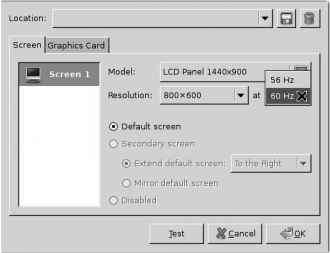
From the menu shown in Figure 6-1, click the Configure button to run the Screens and Graphics utility. You will see the screen shown in Figure 6-2. Click the Detect button to let the Screens and Graphics utility detect the horizontal range and vertical refresh rate. However, this just reverts the setting back to plug-and-play detection, which obviously hasn't worked on your particular system because you were unable to boot up. Screen Graphics Card 6. Click the Graphics Card tab. You have the option to specify the driver and video memory of your graphics card. The detected card is displayed to aid you in selecting the appropriate graphics driver (see Figure 6-3). You can safely leave the setting for the video memory as automatic, unless you encounter problems with your graphics card. 7. Click the Driver drop-down list to select a graphics driver. You can select a driver based on its name by clicking the drop-down list next to the Choose Driver By Name heading.
Third Party Kernel Module Updates
Third-party kernel drivers are provided for certain devices and system support, such as the ATI or NVIDIA Linux graphics drivers for their video cards. You could download and try to install these drivers directly, but it is recommended that you use a third-party package designed for use with Fedora. There are two approaches to providing additional kernel modules a precompiled module for each kernel version, or a dynamically compiled version using Dynamic Kernel Module Support (DKMS). The issue here is that each new kernel version requires its own set of kernel drivers. For example, whenever you update to a new kernel, you then have to install new kernel modules for that kernel for the ATI and NVIDIA graphics drivers. You will not have access to the NVIDIA or ATI drivers until you do. Also, if you want to install a new version of the graphics drivers, you then have to install their module versions for your particular kernel. Using the Livna kernel modules is preferable.
Selecting and Configuring an X Server
The XFree86 project provides support for an amazing array of graphics hardware. This outcome is possible partly due to cooperation by manufacturers through public release of graphics device documentation and driver software, and partly due to the tenacity of the XFree86 developers. Fortunately, many manufacturers who were historically uninterested in offering technical information to the XFree86 project have become cooperative. The result is that most recent video hardware is well-supported by XFree86. XFree86 video drivers are written for graphics chipsets, not the video cards they're installed on. Multiple video cards from a variety of manufacturers can carry the same chipset, making those cards nearly identical in function. You must verify that the chipset on your video card is supported by XFree86 to use advanced graphics features. This program is distributed with XFree86. XF86Setup is a graphical program that starts a VGA X server, which should run on most PC hardware.
Grand Unified Bootloader
Officially, the GRUB configuration settings are held in the boot grub menu.lst file. You can make your entries in the configuration file and GRUB will automatically read them when you reboot. You can set several options, such as the timeout period and the background image to use. Check the GRUB info documentation for a detailed description Use the info grub command to access the GRUB info documentation.
Exploring the Desktop Components

The My Computer icon is very useful for viewing the most important information about your hardware, network status, disks (hard disks, removable media, and external devices), operating system, and some common folders at one glance. For example, find processor type and speed listed there, information about your RAM and the current swap status, or your graphics card. OS Information lists the most important information about your operating system such as the Kernel version included, the current user, version number and type of the operating system, and the KDE version number. openSUSE ships with a number of further tools (either graphical or command line tools) that you can use to get more detailed information about your system. If you need detailed hardware information about your system, use the YaST hardware probing, described in Section Probing Your Hardware (Chapter 2, Setting Up Hardware Components with YaST, tStart-Up).
The Linux Source Tree
In the other directories found in Documentation, you will find similar text files that deal with the kernel modules for CD-ROM drivers, file system drivers, gameport and joystick drivers, video drivers (not graphics card driversthose belong to X11R6 and not to the kernel), network drivers, and all the other drivers and systems found in the Linux operating system. Again, these documents are usually written for programmers, but they can provide useful information to the intermediate and advanced Linux user as well.
Configuring X the Graphical Server
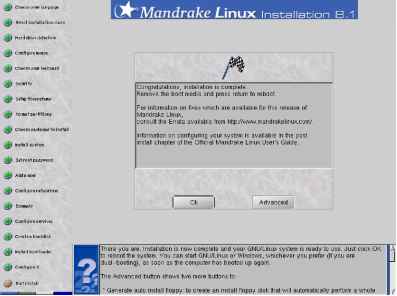
X (for X Window System) is the heart of the GNU Linux graphical interface on which all the graphics environments (KDE, Gnome, AfterStep, WindowMaker ) bundled with Mandrake Linux rely. In this section, DrakX will try to configure X automatically. As a last resort, if you still cannot get X to work, choose Change graphics card, select Unlisted card, and when prompted on which server you want, choose FBDev. This is a failsafe option which works with any modern graphics card. Then choose Test again to be sure.
Take complete control of desktop effects and animations

If you don't see any visual effects then it's possible your computer isn't capable of supporting the effects. Alternatively, you might not have the correct graphics drivers installed click System Administration Hardware Drivers and, if necessary, put a check alongside the entry in the list representing your graphics card. Need to create sophisticated diagrams, and used to the power of programs like Adobe Illustrator or Corel Draw No problem. Just use Synaptic to search for and install the inkscape package. Inkscape is a professionallevel vector drawing package that can be used for just about any task, and is used to create much of the GNOME desktop artwork. It features node editing, complex path operations, the ability to trace bitmaps, and lots more. Files are outputted in the industry-standard SVG file format. Once installed, Inkscape can be found on the Applications Graphics menu.
Dmesg Displays Kernel Messages
Another common source of problems is the Direct Rendering Infrastructure (DRI), which allows graphics drivers direct access to the kernel. The corresponding kernel component is the Direct Rendering Module (DRM not to be confused with Digital Rights Management). This output tells you that an ATi Radeon graphics card is configured correctly Any configuration problems must be in the etc X11 xorg.conf file. The nVidia binary drivers do not use DRI. The dmesg log is a good place to start when diagnosing faults. If you have configured a system service incorrectly, this log quickly fills up with errors.
Some Rectangle Tricks
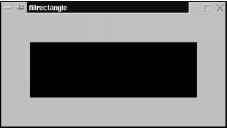
A number of shapes can be drawn using QPainter, and there are dozens of ways to draw them. This section demonstrates the basics of Qt graphics by using examples of some basic ways to draw and fill a simple rectangle. The following example program creates a blank widget and draws a rectangle onto its window. The constructor, beginning on line 14, creates a widget with a fixed-size window. There is no drawing done by the constructor because graphics can only be put on display after a window has been realized (that is, it actually has a place to store pixel values). The paintEvent() method is called any time the display needs to be refreshed. That is, the window does not memorize what you have drawn and automatically replace it. Your program must be prepared to draw the window again and again it should draw it from scratch every time this method is called.
Realtime Strategy Games
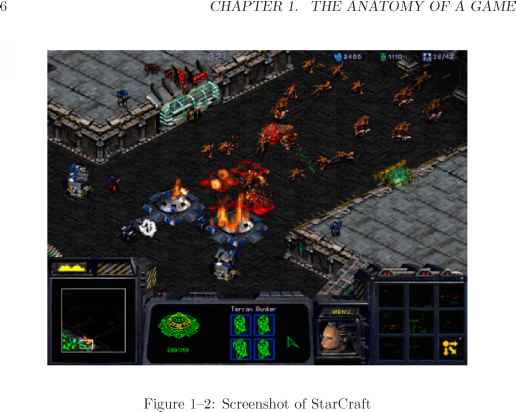
Real-time strategy games are comparatively easy to program, because, with some exceptions, they do not involve 3D graphics or complicated mathematics StarCraft is by far the most successful RTS game, combining pleasing graphics, a large selection of well-balanced units, and interesting battlefields in a very well-rounded game and exciting game. Solid game design is by far the most important issue in creating a real-time strategy game, and StarCraft is an excellent example. StarCraft (which will run under Linux with WINE3 ) is not the first notable game from Blizzard Entertainment, and it will be interesting to see what Blizzard comes up with in the future.
Setting Up a Remote Printer
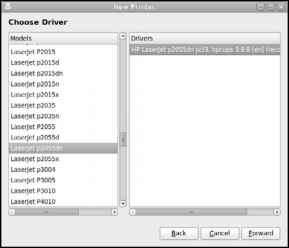
If the model of the printer you are configuring is not listed, check whether the printer can emulate another printer (i.e., if it has an emulation mode). If it can, check whether the manufacturer and model of the printer it can emulate are listed and set it up that way. If all else fails, click Back and select Generic (at the top of the list) as the manufacturer. Then click Forward and choose a type of generic printer from the list box labeled Models. Choose the PostScript Printer from the list if the printer is PostScript capable. Then select a PostScript driver from the list box labeled Drivers. If the printer is not PostScript capable, select text-only printer you will not be able to print graphics, but you should be able to print text. Click Forward.
The Ubuntu Desktop - An Overview
I think you'll find the menus are laid out much better than the Windows layout. The menu applet contains three menus, and you can customize your own menu if you like. The first menu, the Applications menu, provides easy access to every program installed on your computer. The menu is laid out a little different than Windows, because menus are grouped into categories Accessories, Games, Graphics, Internet, Office, Sound and Video, and the Ubuntu Software Center. If you run through each of these sub menus you'll find that Ubuntu provides you with a lot of applications when you first load your operating system.
More Products
| Logo Doll HQ Logo Templates |